January 1, 2026
I'm Looking for a Spiritual Directorwith Rolling Ridge staff


Start

October 13, 2026
at
6:30 pm
End
October 13, 2026
at
8:00 pm
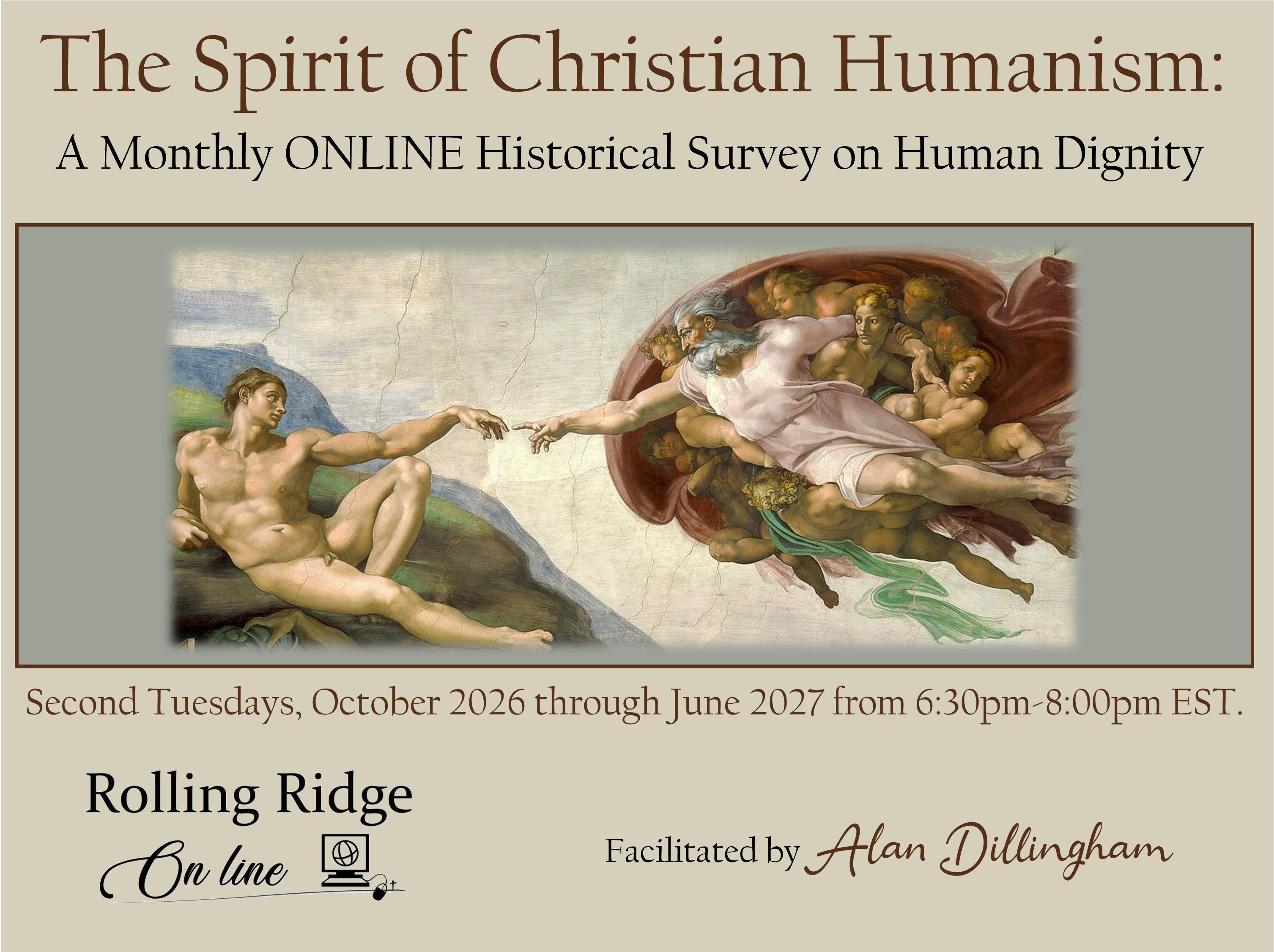
Will artificial intelligence be used to build a world that protects human dignity or undermines it? This is the central question Pope Leo XIV poses in his May 2026 encyclical, Magnifica Humanitas. The rise of AI asks us to consider what it means to remain human in contemporary society.
Join us for an online series as we consider "The Spirit of Christian Humanism."
Across nine months of study, conversation, meditation and contemplative reflection, Alan Dillingham will guide participants in an exploration of how the Christian understanding of human dignity has unfolded over the last three thousand years.
More than a historical survey, this series is a call to spiritual renewal. Together we will explore the Spirit of Christian Humanism, that speaks with remarkable relevance to our own time, offering enduring wisdom for navigating a world marked by rapid technological change, cultural uncertainty, and profound questions about the future of humanity.
Whether you are a lifelong student of theology, a seeker of wisdom, or simply someone longing for a deeper understanding of what it means to live as a human being created in the image of God, The Spirit of Christian Humanism offers an opportunity to learn, reflect, and grow in the company of fellow pilgrims.
Join us beginning on Tuesday, October 13, 2026 from 6:30-8:00 pm eastern. We will meet monthly on the second Tuesdays through June 8, 2027.
Cost for the series: $108 for 10 ONLINE 90 minute sessions (total of 13.5 hours). Unfortunately there is no part-time pro-rated registration.
Session 1 — October 13, 2026: What is Christian Humanism?
An introduction to the sources and principles that shape contemporary Christian Humanism, with attention to its biblical and theological foundations.
Session 2 — November 10, 2026: The Jewish Roots of Christian Humanism
Exploring creation, covenant, liberation, poetry, and messianic hope through Genesis, Abraham, Moses, David, and the prophetic imagination.
Session 3 — December 8, 2026: Christ Reveals Humanity to Itself
A study of Jesus as the Son of Man, the Kingdom of God, the Body of Christ, and the distinctive contributions of Pauline and Johannine theology.
Session 4 — January 12, 2027: The Church Fathers and the Discovery of the Person
Christianity’s encounter with classical culture, the early councils, and Augustine’s profound insights into interiority, conscience, and the human longing for God.
Session 5 — February 9, 2027: Reason, Nature, and Grace: Aquinas and the High Middle Ages
The rise of universities, the scholastic method, Aristotle’s rediscovery, and the Thomistic synthesis of faith, reason, virtue, and human flourishing.
Session 6 — March 9, 2027: Renaissance Christian Humanism: Erasmus, More, and the Renewal of Christian Culture
The recovery of classical learning, ad fontes, education and virtue, and the contributions of both Protestant and Catholic reformers.
Session 7 — April 13, 2027: The Testimony of the Mystics
A contemplative exploration of the mystics whose witness deepens Christian Humanism through interior transformation, divine intimacy, and spiritual freedom.
Session 8 — May 11, 2027: The Human Person in the Modern World
From Newman to Leo XIII to Vatican II, this session examines how Christian Humanism responds to industrialization, social change, and the modern search for meaning.
Session 9 — June 8, 2027: Christian Humanism and Artificial Intelligence: The Future of the Human Person
A forward looking reflection on Magnifica Humanitatis, technology, AI, biotechnology, transhumanism, and the contemporary challenges facing human dignity and flourishing.
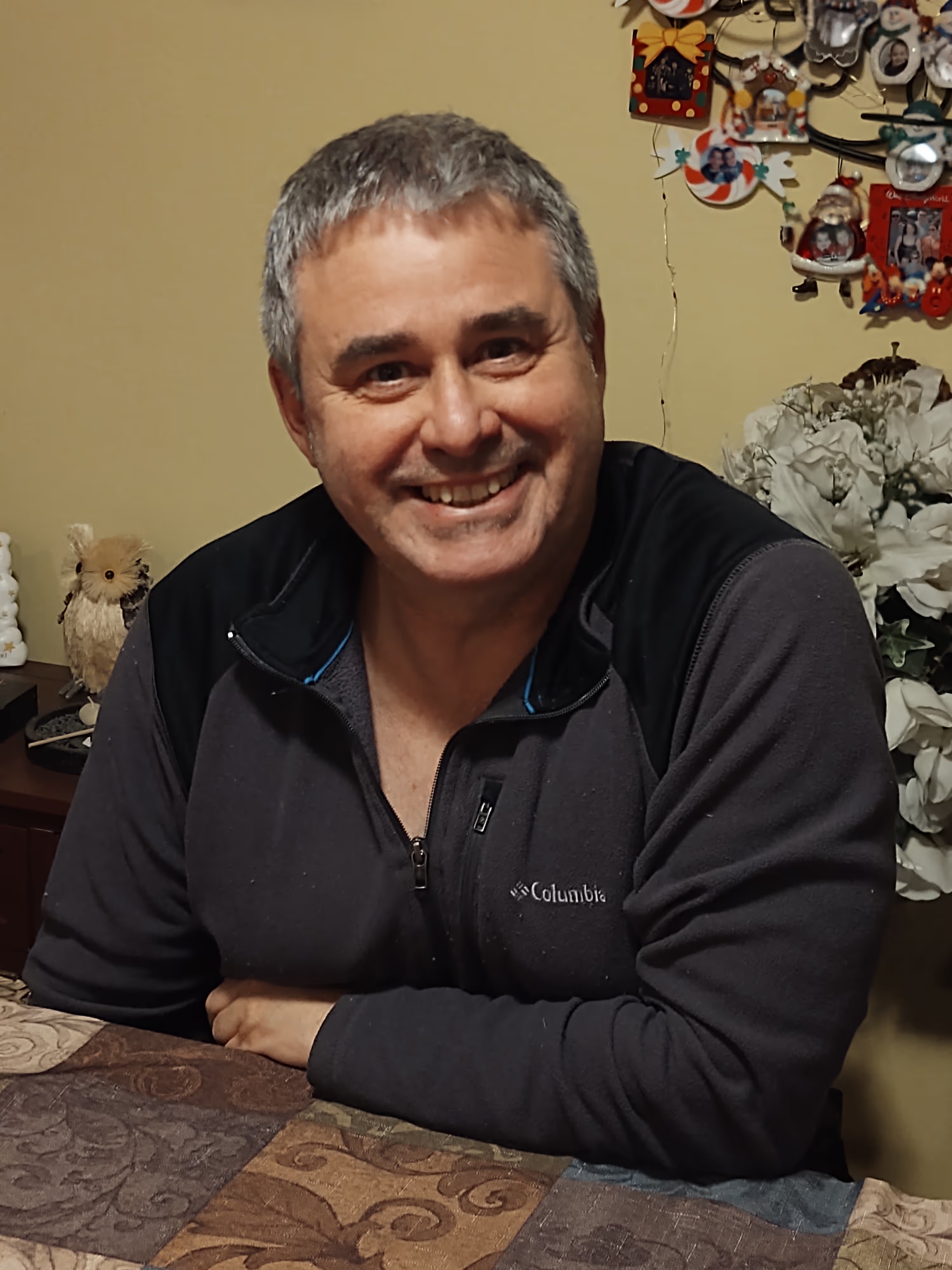
Alan Dillingham holds a Ph.D. from Georgetown University and is a former professor at Villanova University, Pope Leo’s alma mater. You can follow more of Alan’s work by subscribing to his substack, Pilgrim Soul.

.avif)

Rolling Ridge Retreat and Conference Center
660 Great Pond Road
North Andover, MA, 01845
thestaff@rollingridge.org
Phone: (978) 682-8815
Fax: (978) 681-1162
.avif)